How to Fix a Bad Selfie with AI
Every camera roll has them: selfies where the light and angle are perfect but the expression betrayed you — half-blink, awkward smile, eyes drifted to the screen instead of the lens. A selfie fixer app built on AI expression editing can rescue those almost-perfect shots in under a minute.
What actually makes a selfie look 'off'
It's rarely the face itself — it's micro-timing. Eyes catch mid-blink, smiles get caught rising or falling, and gaze aims at the preview screen (below the lens) instead of the camera, which reads as looking slightly away. All three are exactly what an expression editor adjusts: eyelid openness, smile position, and eye direction.
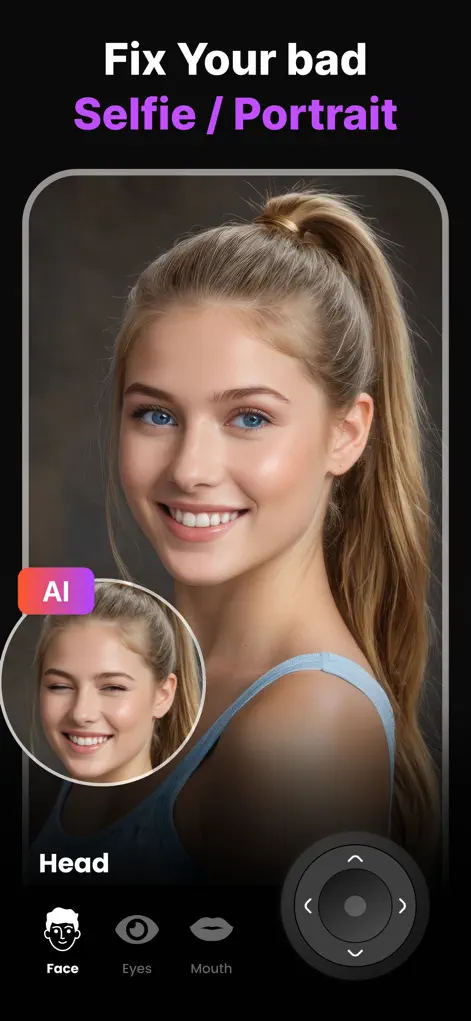
Step-by-Step: How to Fix a Bad Selfie with AI
- Pick your almost-good selfie. Choose the shot where lighting and angle work — Reshot AI will handle the expression.
- Fix the eyes first. Open half-closed eyes with the eyelid slider and redirect gaze from the screen up to the lens with the eye-direction control. This alone transforms most selfies.
- Settle the smile. Use the Smile Enhancer to complete a half-formed smile or soften an overdone one until it looks like your natural expression.
- Optional polish, then save. Level any head tilt, run AI Photo Enhancer for extra sharpness, compare before/after, and export.
Selfies worth rescuing
Selfies usually suit Reshot AI because the face is close to the lens and pointed at it. The ones that rescue best are sharp, reasonably well lit and taken at arm's length or closer.
Group selfies where your face is small at the edge, mirror selfies with the phone covering part of your face, dark and grainy night shots, and photos with heavy motion blur are much harder, and the app may not produce a usable change. Extreme angles, like a shot from far below the chin, are tough too. Fixing a slight squint or lifting the gaze a little works far more often than rebuilding a whole expression.
Taking selfies that need less fixing
A few habits reduce how much editing you need later:
- Look at the lens, not the screen, just before you take the shot.
- Face a window or other soft light instead of having it behind you.
- Hold the phone at eye level or slightly above, not below your chin.
- Use a volume button as the shutter so tapping the screen doesn't shake the phone, and take several shots.
When a selfie still needs help
Even with good habits, some shots come out with a half-blink or a smile caught halfway. Because those selfies are sharp and close up, they are exactly the kind of photo that edits well, so pick the best of them and fix only what is wrong.
Try It on Your Own Photo
Expression Editor – Reshot AI is free to download on the App Store. Fix your first photo in under a minute.
⬇ Download Reshot AIFrequently Asked Questions
Which selfie problems can AI fix?
Half-closed or squinting eyes, off-camera gaze, missing or awkward smiles, head tilt, and overall photo sharpness — the full 'almost perfect' checklist.
Will the fixed selfie still look like me?
Yes. The AI edits your real face while preserving identity, skin texture, and lighting — it looks like the take you meant to get.
How long does it take?
Each adjustment renders in about a second; a full selfie rescue typically takes under a minute.